Grumpy, unpredictable and gloriously wild
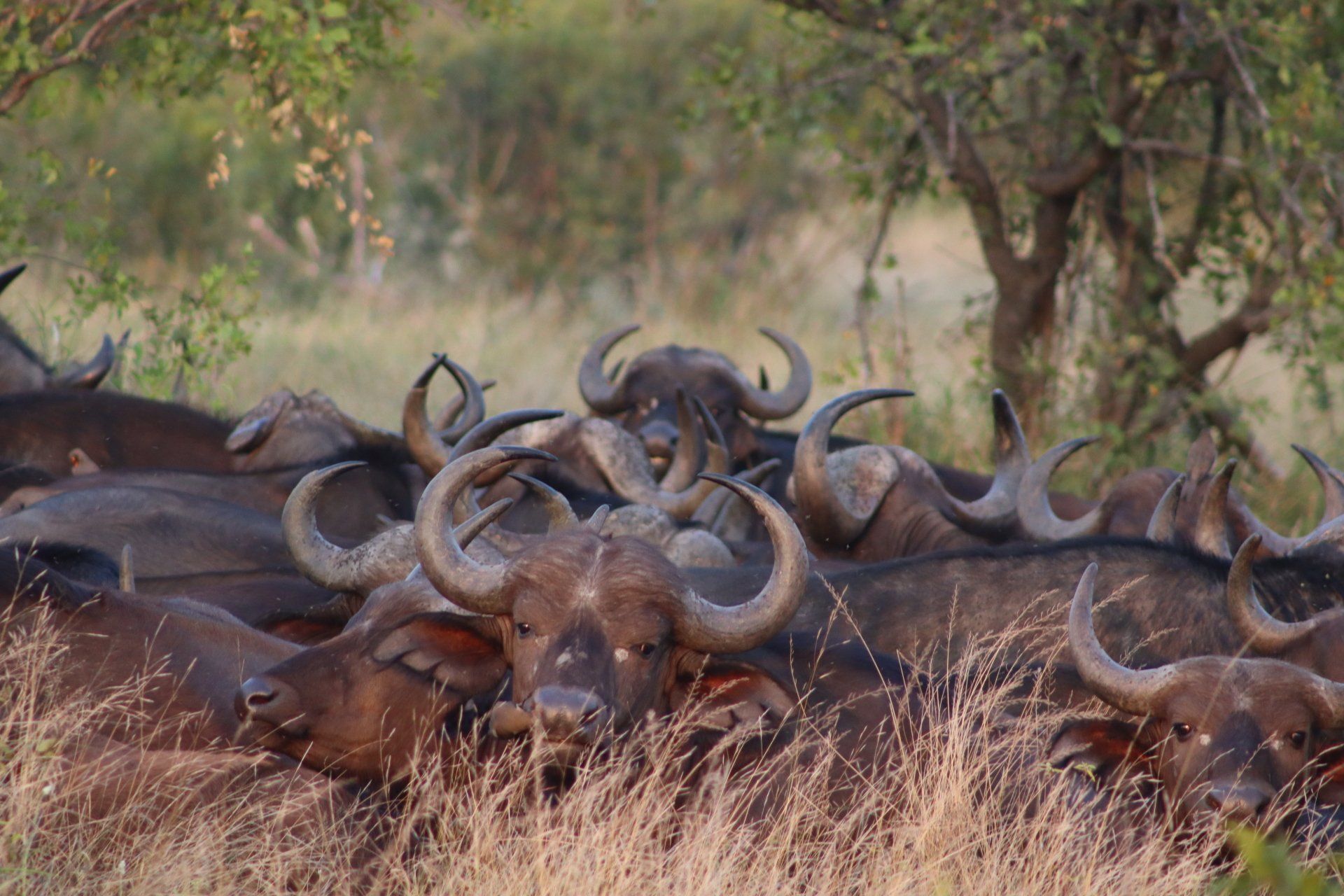
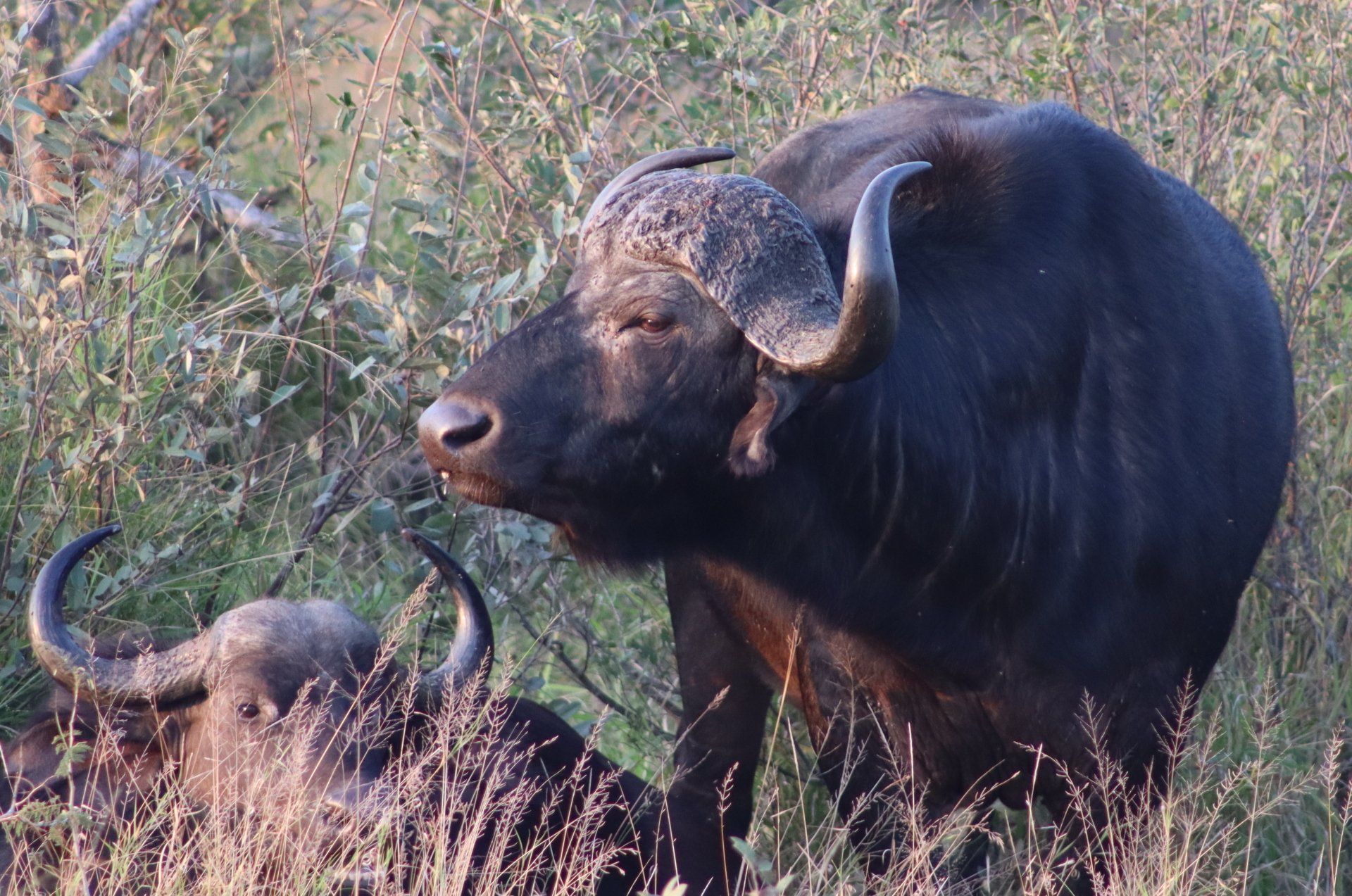
Herd of buffalo lying in dry grass beneath trees, with one facing forward in the center


There's more to Cape buffalo than meets the eye!


They're the most irascible of the legendary Big Five, and probably the most underrated, but don't be fooled by the bovine habits of Cape buffalos because these guys mean business, and are far more than just cows on steroids!


Famed for their unpredictable temperament and impressive horns, the Cape buffalo is the largest and most widespread of the four sub-species of the African buffalo and is found in Southern and East Africa. It's the largest and most formidable of the African bovids and has a reputation to match.


The Cape buffalo is probably the most grumpy of all of Africa's megafauna. Buffalos always looks at you like you owe them money. They're impossible to read and it's this aspect that makes them one of the most dangerous animals in the African bush. They never give a "tell" sign to let you know when they've had enough or have taken a dislike to you - they just charge. So we always show them huge respect when out on game drives. 


Congregating in huge herds, sometimes more than 1000 strong, buffalo are bulk grazers eating mainly grass and will spend most of their day eating. Herds are dominated by large bulls who are recognisable by their huge horns that meet in the middle of their forehead forming a helmet-like structure called a boss. Cows do not have a boss, and their horns are generally narrower and more clearly demarcated. 


Bulls use their horns and bosses to establish dominance in the herd, frequently sparring with one another and sometimes injuring one another in the process. The tips of those horns are extremely sharp and can inflict serious, often lethal wounds. They are not afraid to launch counter-attacks on predators like lion, sometimes goring them to death in the process.


Cape buffalos are not gifted when it comes to eyesight and hearing, but their sense of smell is well developed. They are good swimmers and will often be seen crossing rivers and wallowing in the shallows of dams and waterholes, loving the mud which acts as an insect repellant. 


Where there are buffalo there are oxpeckers - we have both red-billed and yellow-billed here on the Klaserie. These little birds keep parasite numbers down, feeding on the ticks and biting flies that plague buffalos wherever they go. You'll often see egrets moving with buffalo herds, feeding on the insects and other creatures disturbed as they graze in long grass. 


You'll see buffalo calves all year round. There is no set breeding season for Cape buffalo but they generally calf at the start of the rainy season, and mate again in the late summer so the calves will be born 11 months later, when the grazing is at its best. The calves are hardy and can stand within 10 minutes of being born. They are fiercely protected by the herd which always keeps them in the centre, surrounded by a sea of sharp horns.


As the bulls get older and past their prime, they leave the herd and become either solitary or form small groups with other, older bulls. You'll often see them wallowing in mud together. The local vernacular for mud is "dugga" so these bulls become known as "dugga boys". 
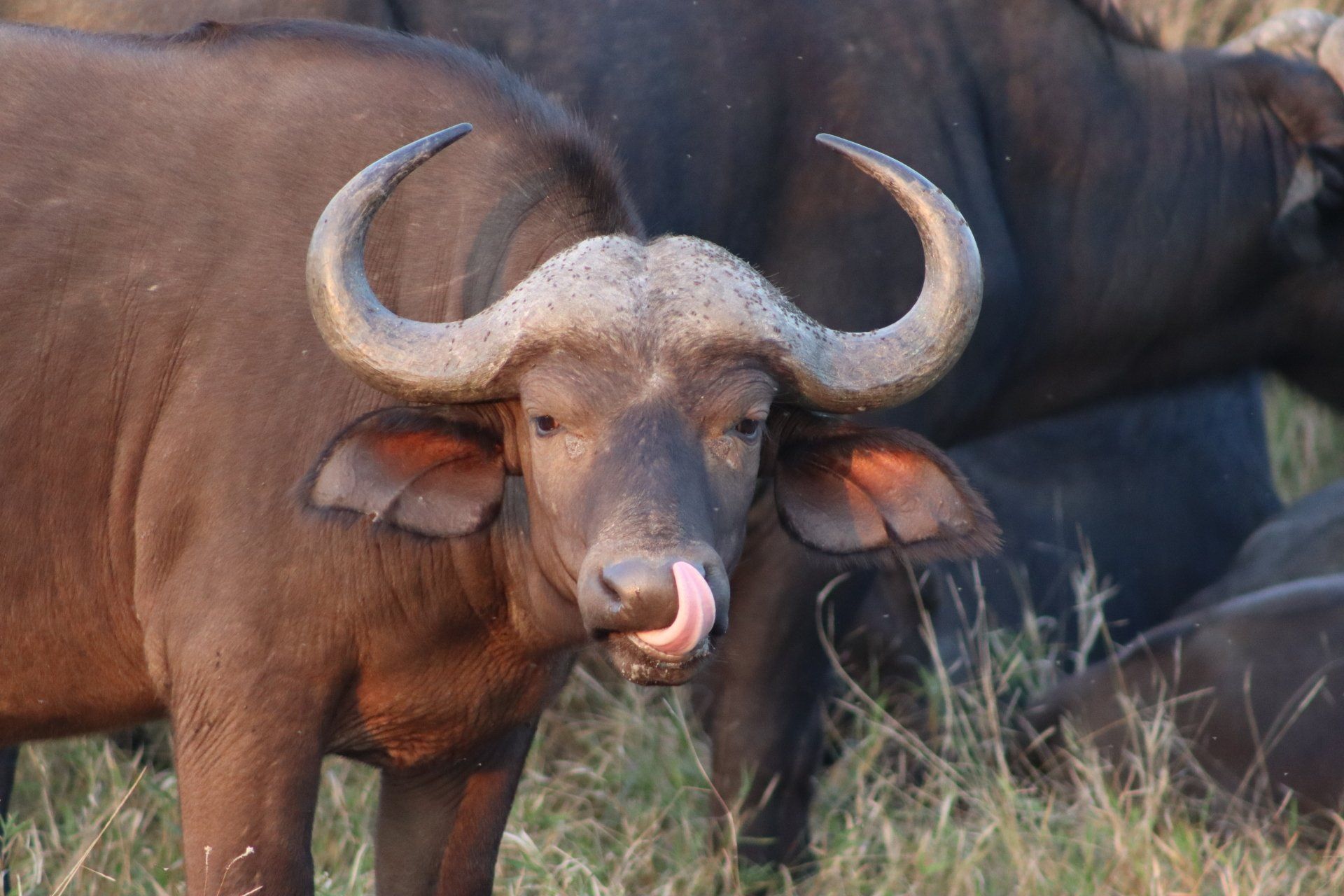


Buffalo with large curved horns standing in grass, facing the camera
Two black buffaloes standing in dry grassland, one facing left with curved horns.
August 3, 2026
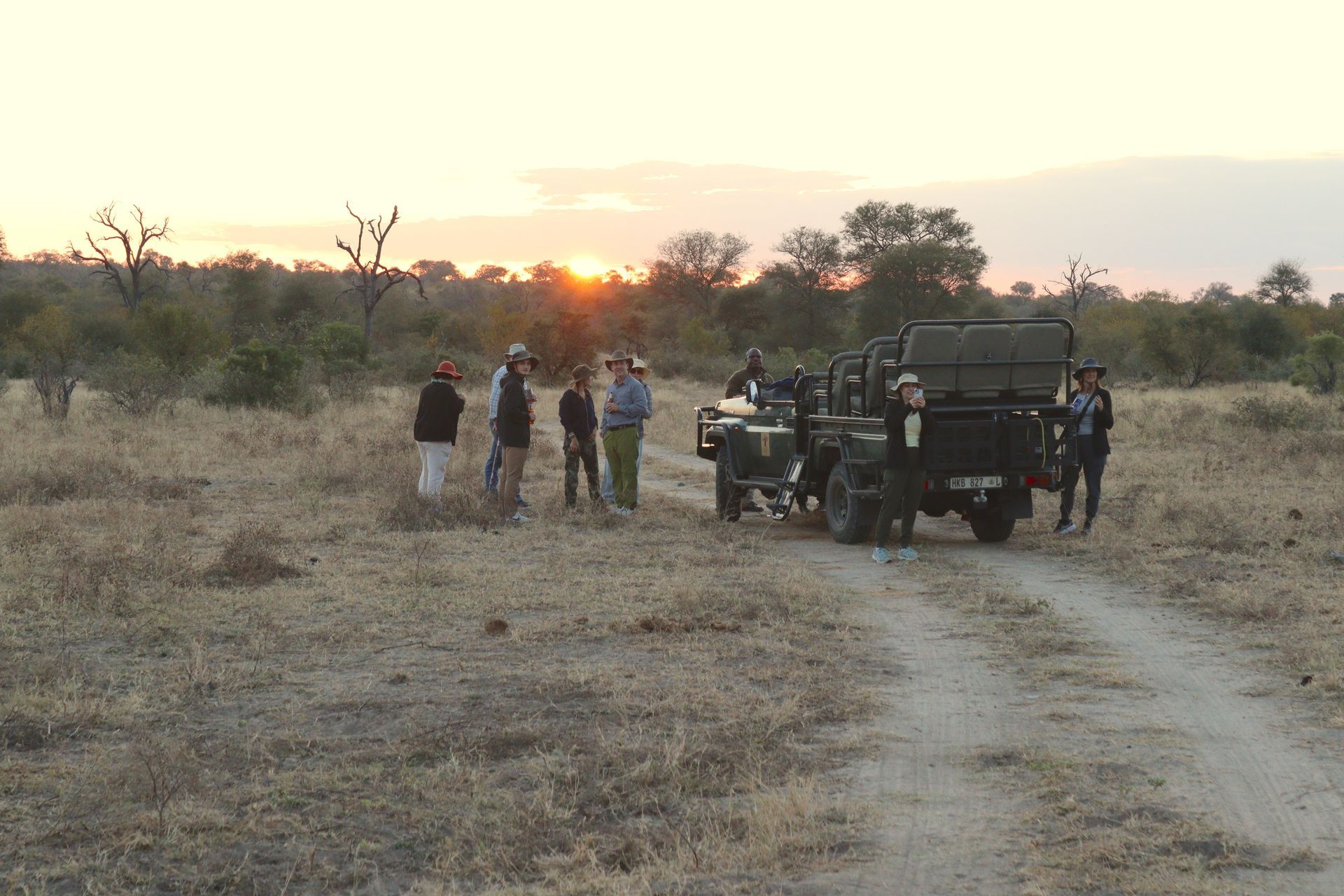
As winter reaches its zenith, the Klaserie has settled into the particular rhythm of the dry season with the ease of somewhere that's been doing this for a very long time. The grass is short and pale gold, the trees have given up enough of their leaves to open sightlines that the lush summer months render impossible.
People gathered near safari vehicles on a dirt road at sunset in a dry savanna.
July 13, 2026
Seasoned safari-goers will tell you, hand on heart and with the conviction of people who've tried most things, that a game drive in a private reserve on an open safari vehicle is one of the greatest pleasures available to a human being with a passport and a sense of adventure.
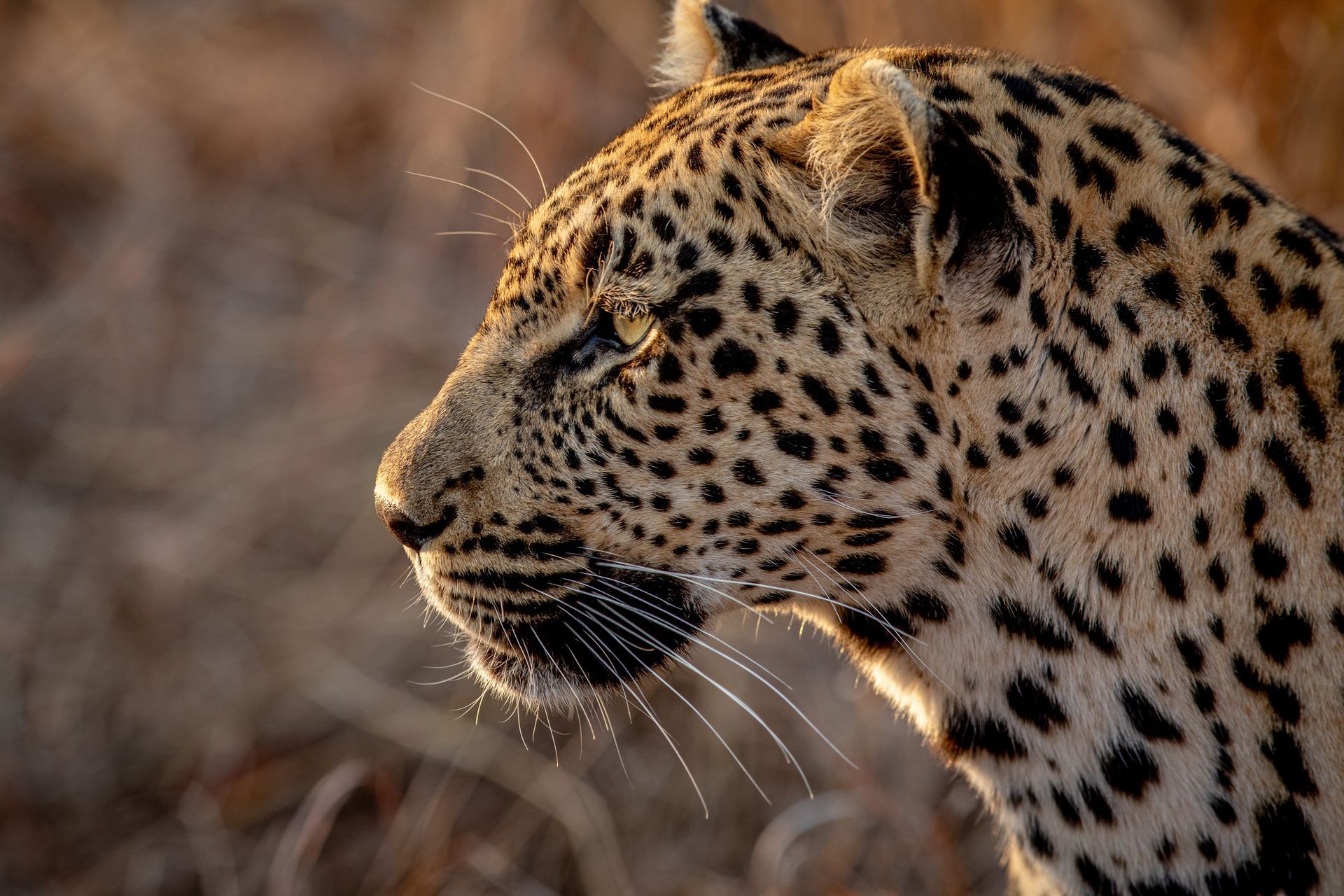
Leopard in profile with spotted coat, looking left in a blurred natural setting
June 17, 2026
Every so often, someone asks the question directly... They've looked at the rates, done the mental comparison with a city hotel or a beach resort, and they want to understand what justifies the number. It's a fair question, and it deserves a proper answer, because once you understand what actually sits behind the cost
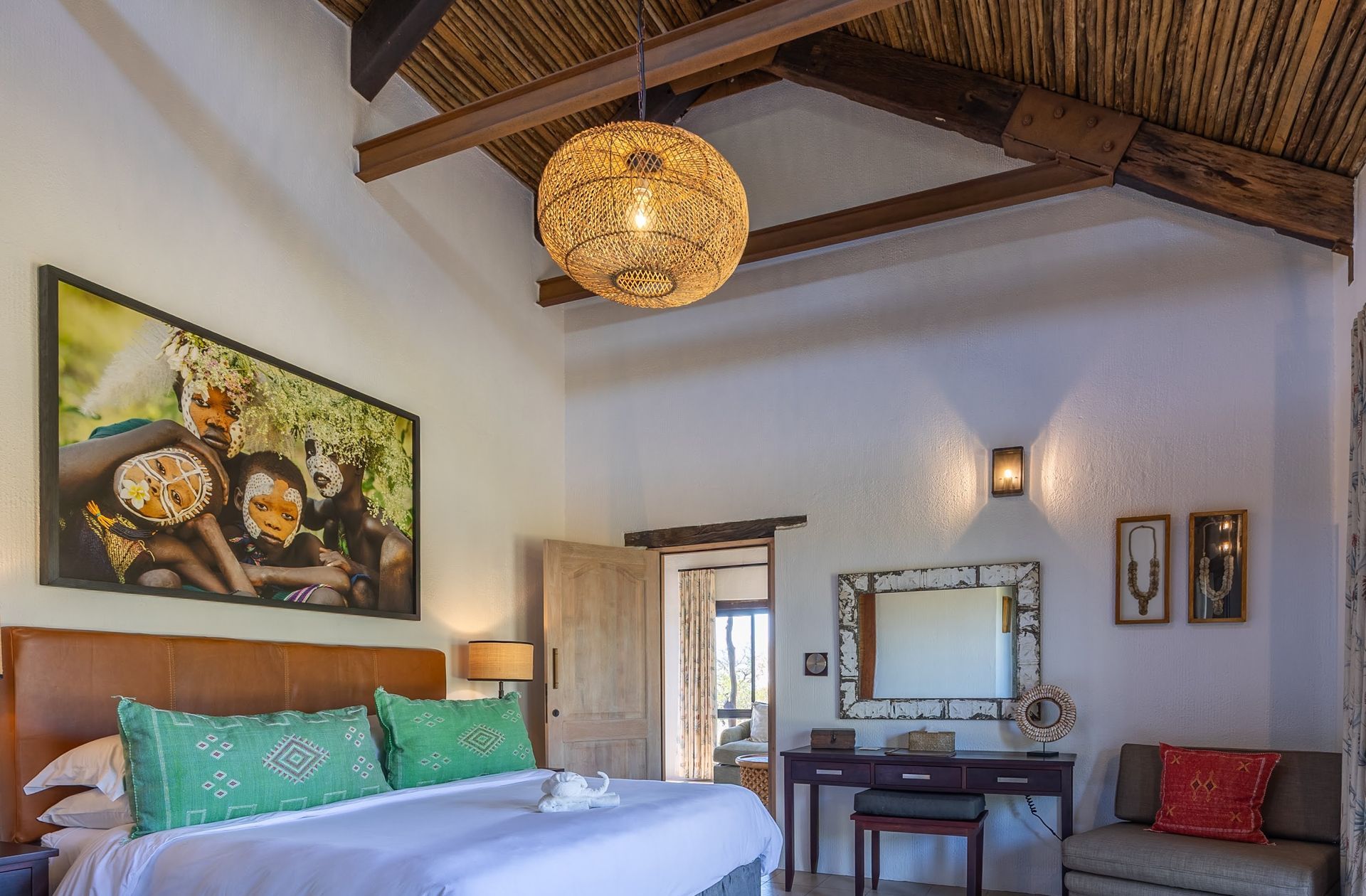
The main bedroom
May 7, 2026
There's a particular kind of holiday that parents of young children dream about: one where the kids are genuinely, wide-eyedly captivated, where the adults can actually relax, and where the experience feels special enough to stay with everyone long after the tan has faded.
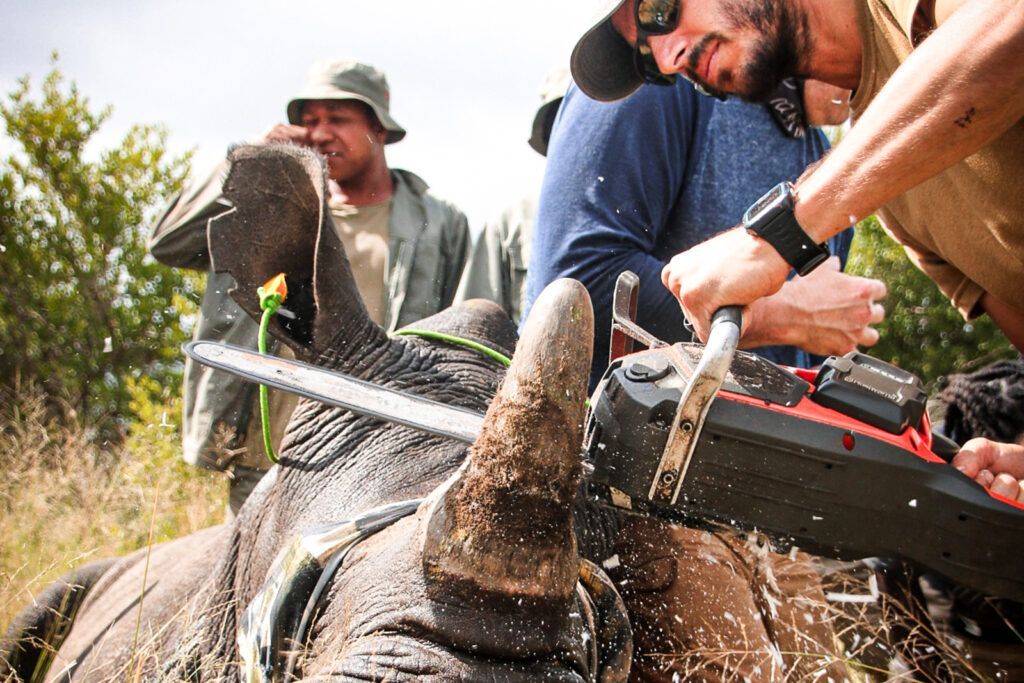
People cutting apart a large animal carcass outdoors with chainsaws and knives, splashing debris.
April 13, 2026
Ask anyone who has spent time in the Klaserie what makes it different and they'll pause before answering. Not because the answer is difficult, but because it's surprisingly hard to put into words without sounding like you're overstating it.
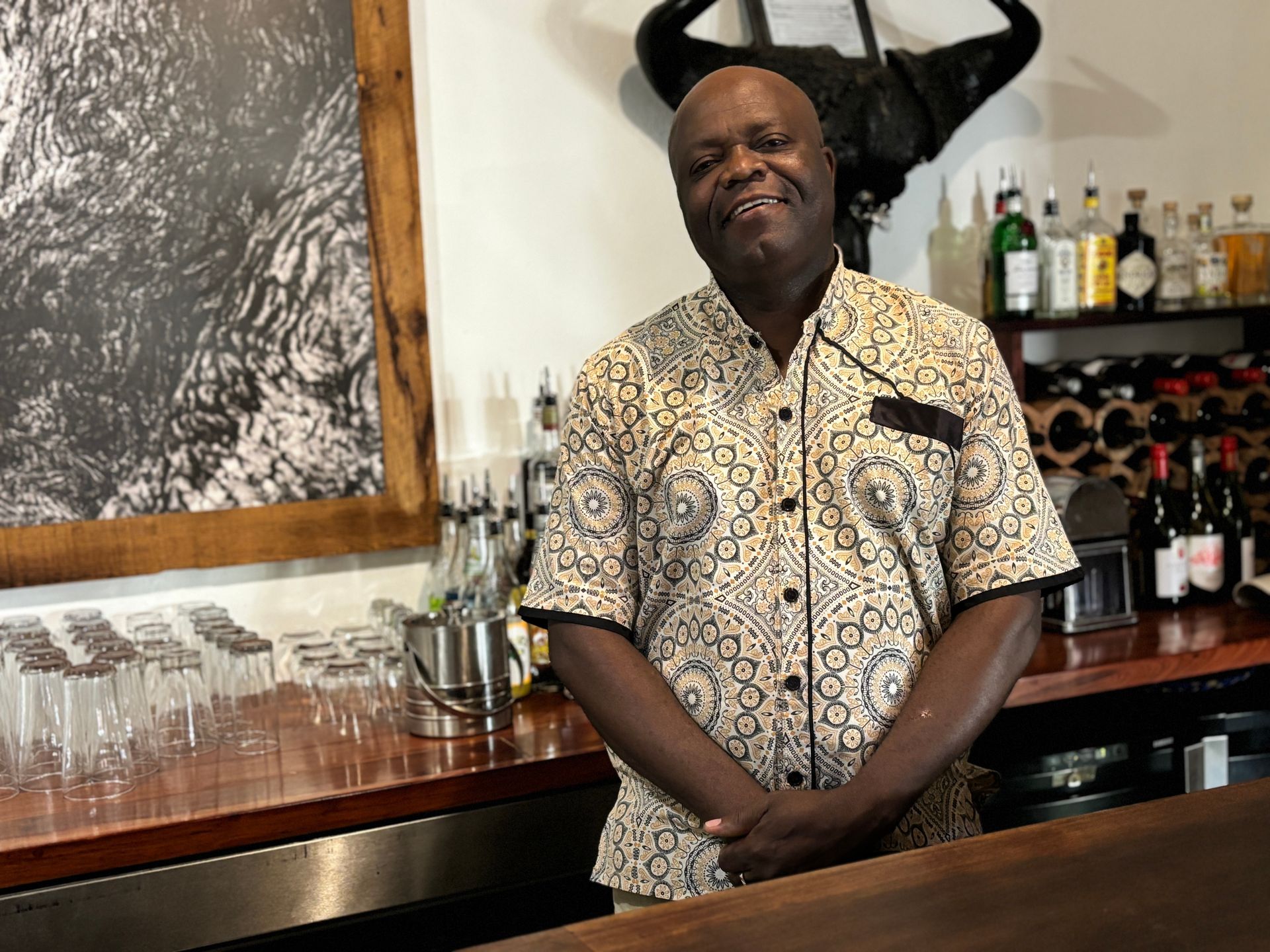
Man standing behind a bar, wearing a patterned shirt, with glasses and bottles on the shelves behind him.
March 18, 2026
From Phalaborwa to the wilderness, Harold’s journey is one of dedication, resilience, and balance. It’s a story of someone who has navigated the twists and turns of hospitality work, the challenges of running his own business, and the demands of family life.
Person standing on a wooden deck beside patio tables in front of a brick building.
February 12, 2026
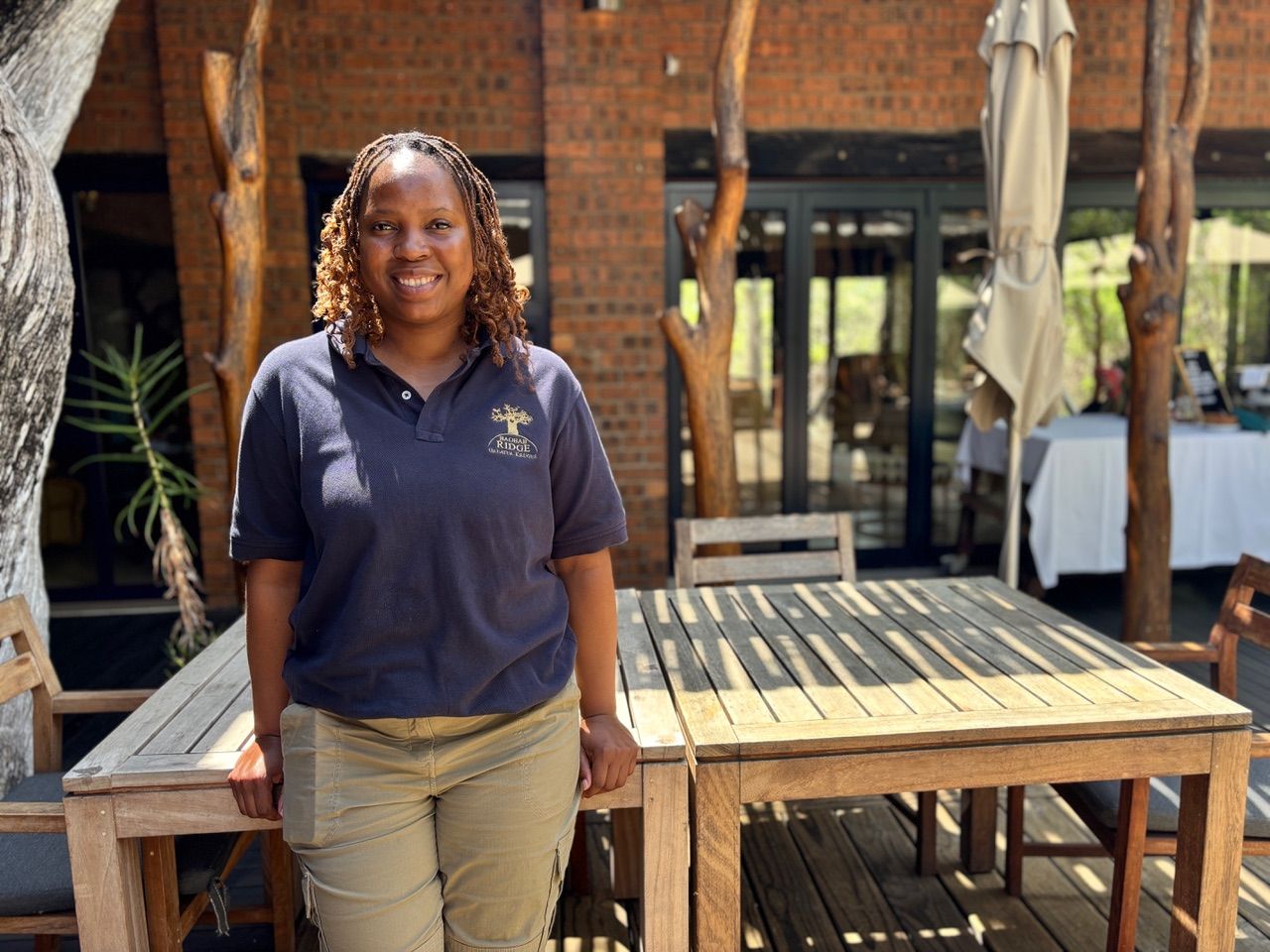
In the heart of the Klaserie, where wildlife roams freely and each day brings something new, Glad Magopane has found her rhythm in charge of lodge administration at Baobab Ridge. Her curiosity, resilience, and willingness to embrace the unexpected have helped her carve out a place for herself
Smiling man in beige shirt and cap leaning on green safari vehicle outdoors
January 19, 2026
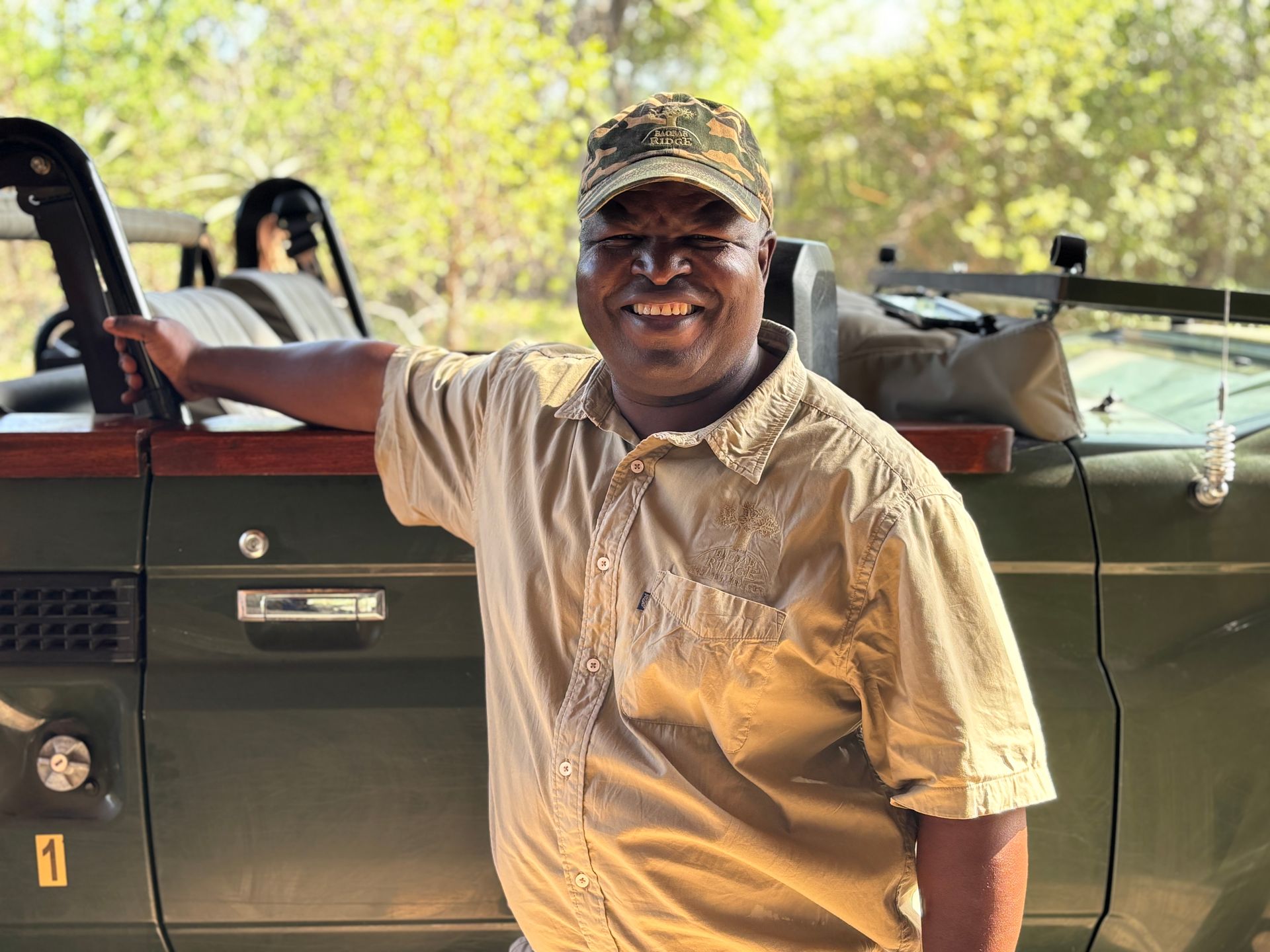
Some guides learn the bush through books, exams and years on the job. Others grow into it long before they ever wear a uniform or lead a game drive. For Shadrack Mathebula, guiding is not just a profession, but an extension of a life lived close to the land, shaped by memory, movement and a deep cultural understanding.
Two elephants grazing in a green savanna with trees and a distant horizon
December 3, 2025
December at Baobab Ridge is pure summer. While much of the world prepares for snow and scarves, we celebrate the festive season with long golden days, balmy evenings, glowing sunsets and the joyful chorus of birds and insects thriving in the heat.
More Posts