The humble zebra - in black and white!
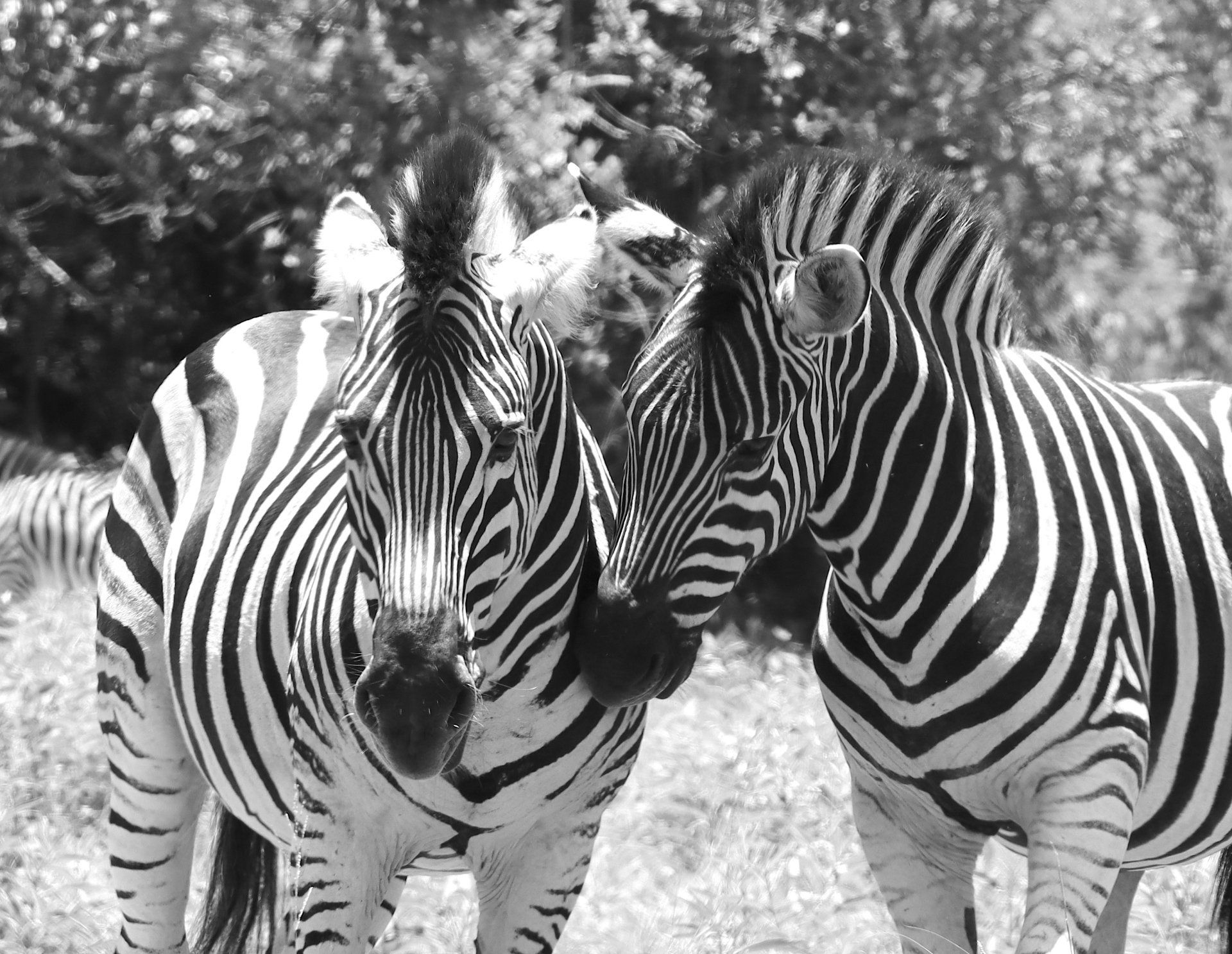
So much more than monochrome stripes!
They're one of the most under-rated of Africa's wildlife species and yet the humble zebra is a global icon, instantly recognisable no matter where you are in the world. However, there's an awful lot more to learn about zebras than just their trademark coat pattern!
For a start, they Africa's wild equines, related to horses but entirely different species. Part of the equidae family that includes horses and asses, there are three living species of zebra in Africa - the Grévy's zebra, plains or Burchell's zebra (which can be seen here on the Klaserie) and the mountain zebra.
Grévy's zebra is found only in Ethiopia and Kenya and takes its name from 19th Century French president Jules Grévy, who received one as a gift. It's the largest zebra, weighing in at 450kg. Plains zebras are somewhat smaller, weighing up to 385kg and are found across sub-Saharan Africa. The mountain zebra is the smallest species, topping out at 360kg and it's only found in South Africa, Namibia, and Angola.
The plains zebra is a hardy, adaptable animal that's at home in a diverse range of habitats, from high mountain ranges to the great plains of East Africa and the lush wetlands of Botswana's Okavango Delta to South Africa's Greater Kruger lowveld. Grévy’s zebras rely on grassland habitats and are generally found at lower altitudes.
Not surprisingly given their name, mountain zebras are happiest in high altitudes and rough, rugged terrain. With their hard, pointed hooves they are good climbers and easily traverse the toughest of territories.
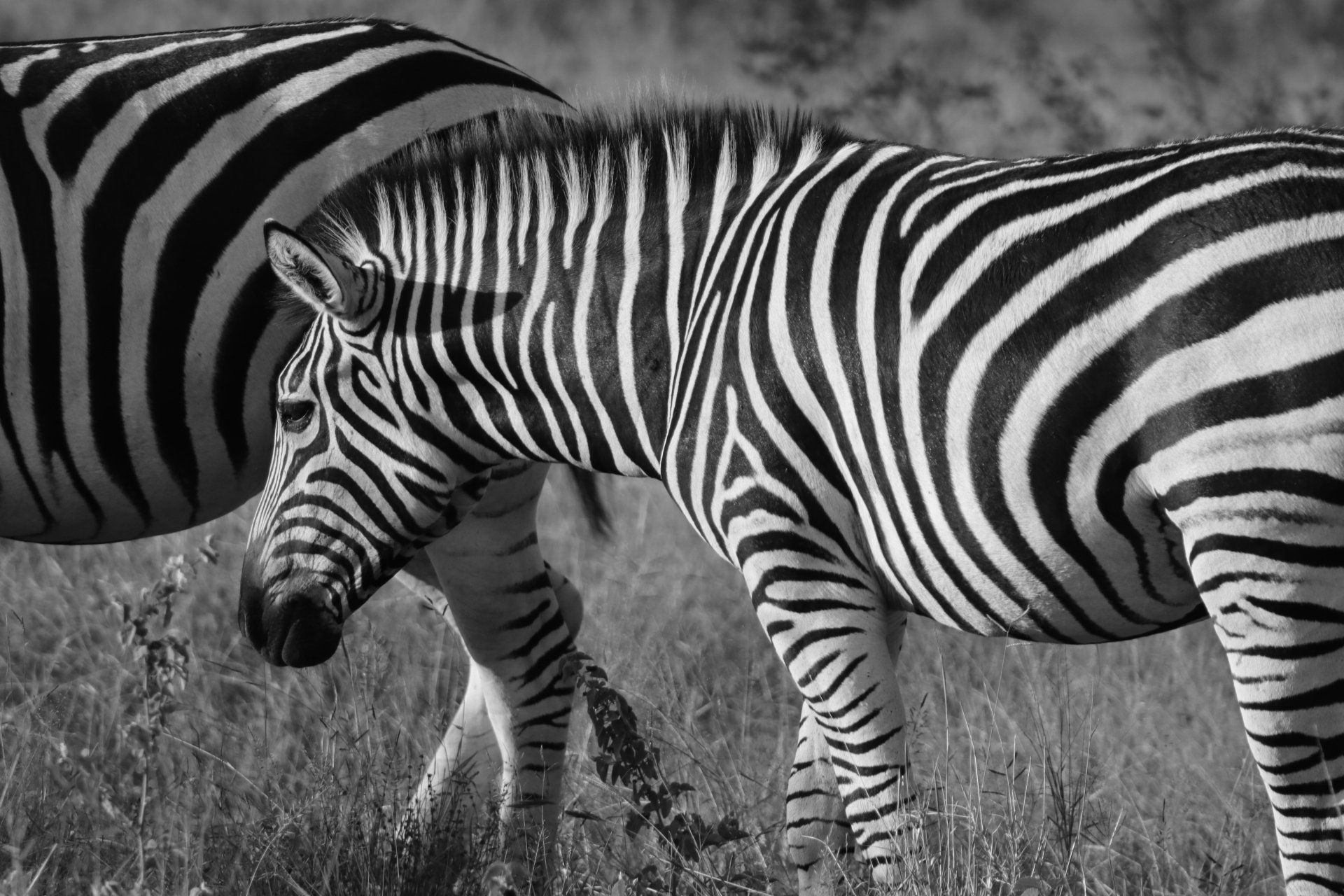
As for that legendary striped coat... Each zebra species has a different pattern of stripes and each individual animal's stripe pattern is unique, rather like a fingerprint.
Grevy’s zebra has narrow vertical stripes covering its entire body, including its ears and mane. The striping pattern of the plains zebra has a distinct "shadow" mark between strips. Mountain zebras have black or deep brown body stripes that are closely packed together. They don't have stripes on their bellies, and those on their head and body are narrower than the ones on their rump.
So what are the stripes for? Well, one theory is that they provide distraction to predators by "dazzling" them. The collective noun for zebra is a "dazzle" because when they move as a herd amongst the low scrub and high grasses of the savannah it does create a dazzling, blurry visual effect that makes it hard to single out any particular animal. Another theory is that the stripes help with thermoregulation and keeping the zebra cool. Scientists are also studying how the stripes help to protect the zebra from biting flies as they are bitten far less than horses in the same conditions!
Most zebras are very social. Plains zebras live in small family groups, called harems, with one stallion and between one and six mares and their offspring. With mountain zebras large breeding herds coexist with groups of non-breeding males overseen by a single, dominant stallion. Grévy’s zebras have a less formal social structure with herd members varying frequently.
Sadly, all three species of zebra are on the endangered species list. The Grévy’s zebra is the most at risk, with estimates at fewer than 2,000 remaining in the wild. Mountain zebras are vulnerable with only an estimated 35,000 individuals remaining. Surprisingly, plains zebras are classed as near threatened, with a declining population of between 150,000 and 250,000 left in the wild across their range.