The toughest little creature in Africa
Honey badgers are both fearless
and fearsome!
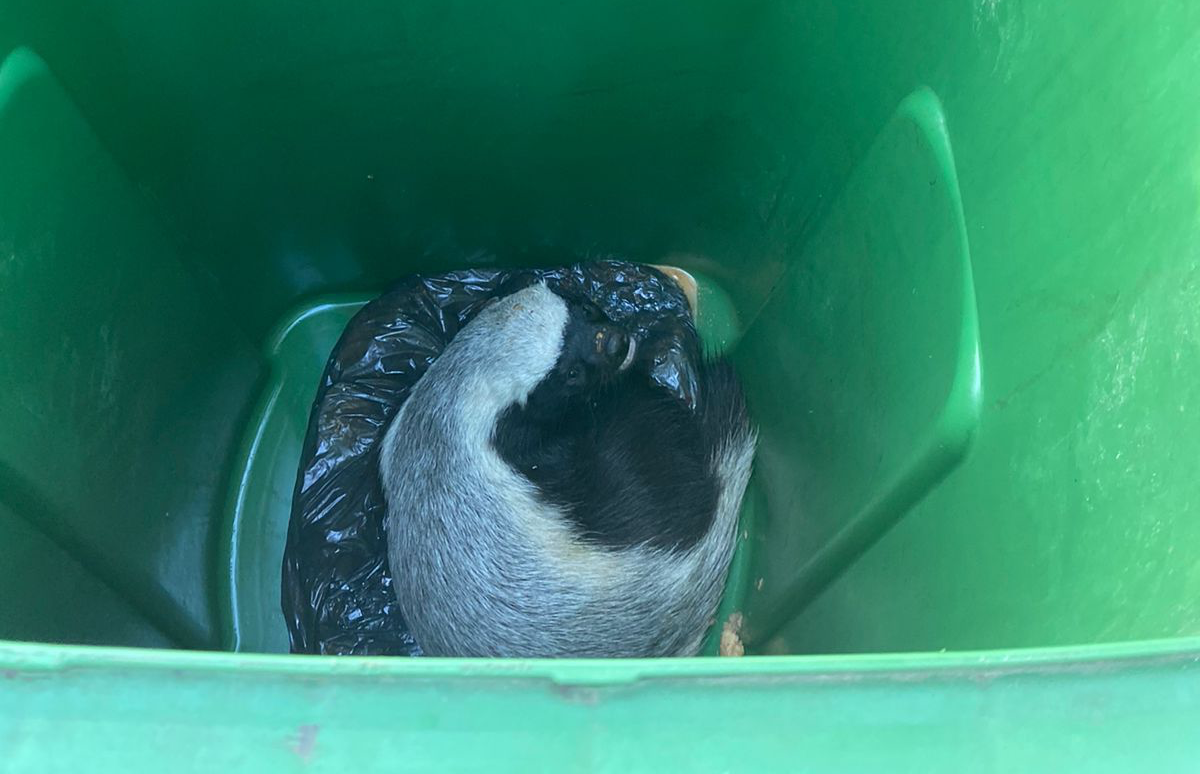
When maintenance worker Michael went to empty the lodge's dustbins recently he was in for a big surprise. Opening the lid of one of the bins and looking inside, he saw a face staring back at him, unusually quietly. Its beady eyes holding his as it seemed to be deciding what to do. It was a honey badger - a creature with a reputation that far outstrips its modest size and that's renowned as being one of the toughest animals in Africa! It was enjoying a bag full of used tea bags and was literally covered in tea!
Respected for its supremely grumpy disposition, fearsome teeth and claws and fearless character, this little scrapper is renowned for taking on anything that comes at it and emerging victorious. It's been known to kill buffalos and lions and will readily defend itself using the oldest ethos in warfare - the best defence is a good offence - attacking readily irrespective of the size of its opponent.
So it was with enormous care and no small amount of anxiety that brave mechanic Nicholas and Brandon transported the honey badger, still happily having its tea-party in the dustbin, out into the wilds of the Klaserie where they released it. Watch the video below of how this went down...
Although distantly related to badgers and other members of the mustelid family like weasels, stoats, martens, polecats and otters, the honey badger is most likened to its North American cousin, the wolverine. It has its own taxonomic family or genus called Mellivora. Its long body is thick-set and broad, especially across its back and its skin is exceptionally thick (around 6mm at the neck) and loose, allowing it to turn and twist within it - a useful defence mechanism that allows it to bite and scratch at anything brave enough to bite and grab hold of it.
Coming in at just over a metre long, with its small, flat head and short muzzle, small eyes and ears, it's built to avoid damage while fighting, which tells you everything, because if there's one thing a honey badger does a lot of, it's fighting, usually against foes twice its size! These curmudgeonly creatures are known for muttering to themselves like grumpy old men, and growl readily at everything from shadows to elephants.
Believe it or not, but their most famous fighting strategy is to attack the genitals and genital area of larger foes, often ripping the genitals off completely, leading to the ultimate death of the former owner from loss of blood. This is how they can bring down buffalo and lions, the latter of which find it virtually impossible to penetrate the honeybadgers' thick skin with their teeth and claws.
The honey badgers' short, sturdy legs are tipped with five-toed feet armed with very strong claws. Short on the back legs but incredibly long on the front limbs, these claws are extremely powerful and are used to dig and rip open earth and trees in the search for food and especially the honey it loves so much.
They are fantastic diggers and fast ones too - churning through the soil in minutes to excavate tunnels in even the hardest of ground. They sleep in tunnels like this during the day as they are primarily nocturnal, especially in the summer when the heat is truly on. It also uses old aardvark burrows and termite mounds as daytime retreats.
Honey badgers have a mutualistic relationship with a bird - the greater honeyguide - which calls to the badger to attract it and leads it to nearby hives. The honey badger then attacks the hive, being impervious to bee stings, and always leaves something for the honeyguide.
They are mostly solitary creatures but will team up with the opposite sex during the breeding season to hunt. They feed on a wide range of vertebrates like tortoises, snakes, rodents, birds and lizards as well as foraging for roots, bulbs and berries.
Honey badgers are exceptionally clever and that brings them into direct conflict with us humans, especially here in safari lodges like Baobab Ridge! We have had them break into our offices and the lodge itself during the night, looking for ways into the kitchen which they will readily sack if given access! The dustbins are easy pickings for them!
All in all, as ferocious and grumpy as they are, we absolutely love them for their tough attitudes and enormous hearts and even though they cause us the occasional headaches with their breaking and entering antics, we have enormous respect for their sheer tenacity, grit and cleverness.